Why Free Demos Matter — For Players and for One-Person Studios
A demo is the one pitch a small studio cannot fake: why free demos win over players, save one-person studios money, and why all five games we cover ship one.
The refund policy is not a demo
Steam's refund window — playtime under two hours, request within fourteen days of purchase — is a decent safety net, but notice what it requires: a purchase. Your money is committed, your testing time is capped, and using it as a sample spoon means buying first and arguing second. A demo inverts all of it. No money moves, no clock runs, no email chain follows. You play a slice of the actual game, and you either want more or you do not.
That matters double for small games, because genre labels do not convey feel. Action, Casual, Indie tells you almost nothing about whether a rhythm game's beat mapping suits your hands, or whether a survival game's pacing respects your evenings. Store descriptions and screenshots are chosen by the seller. A demo is the product, unedited by adjectives.
What a demo earns a one-person studio
A studio with a marketing budget has options — ads, streamers, storefront placement. A one-person studio has the game itself, and a demo is the largest honest piece of it that can travel without the developer attached. Three things a free demo earns, none of which require a purchase:
- Wishlists. A player who finishes a demo and wisheslists the game has already decided to be interested. When launch day comes, Steam emails every wishlister — the demo audience converts from strangers into notifications.
- Feedback while it is cheap. Demo players surface confusion, difficulty spikes and control problems while a fix is still a one-line change rather than a rework. For a studio of one, that is playtesting at the best possible price.
- Proof of mechanics. Ideas that sound gimmicky in a bullet list — trace an axe in a sketchbook and you are holding an axe — prove themselves or collapse within minutes of play. Either outcome is worth knowing before release.
The discipline of a good demo
A good demo is a vertical slice: the real game's opening, tuned to teach the core loop quickly and end before satisfaction turns into sufficiency. The player should reach the end wanting the next hour, not feeling they already had it. Cutting is the hard part — every developer is tempted to show the best room instead of the first one, and a good demo resists that.
The five games covered on this site — disclosure, once and openly: all are by OverLKD Studio, a one-person studio in Germany — each rest on a loop a demo can prove or disprove fast. SlapGains is rhythm-based slap combat with visible body progression, five leagues from Bronze to Diamond; either the beat lands for you in ten minutes or it never will. INKBORN runs an ink economy on top of its sketchbook premise — everything you draw costs ink — while an eraser eats the world from the edge of the page; trade-offs like that are feel questions no trailer can answer. PARRYGON folds Pong into a closed polygon, where parrying inside a tight window charges the orb and every lost wall drops that side of the arena for good. The parry window either feels fair or it does not. Play first, decide second.
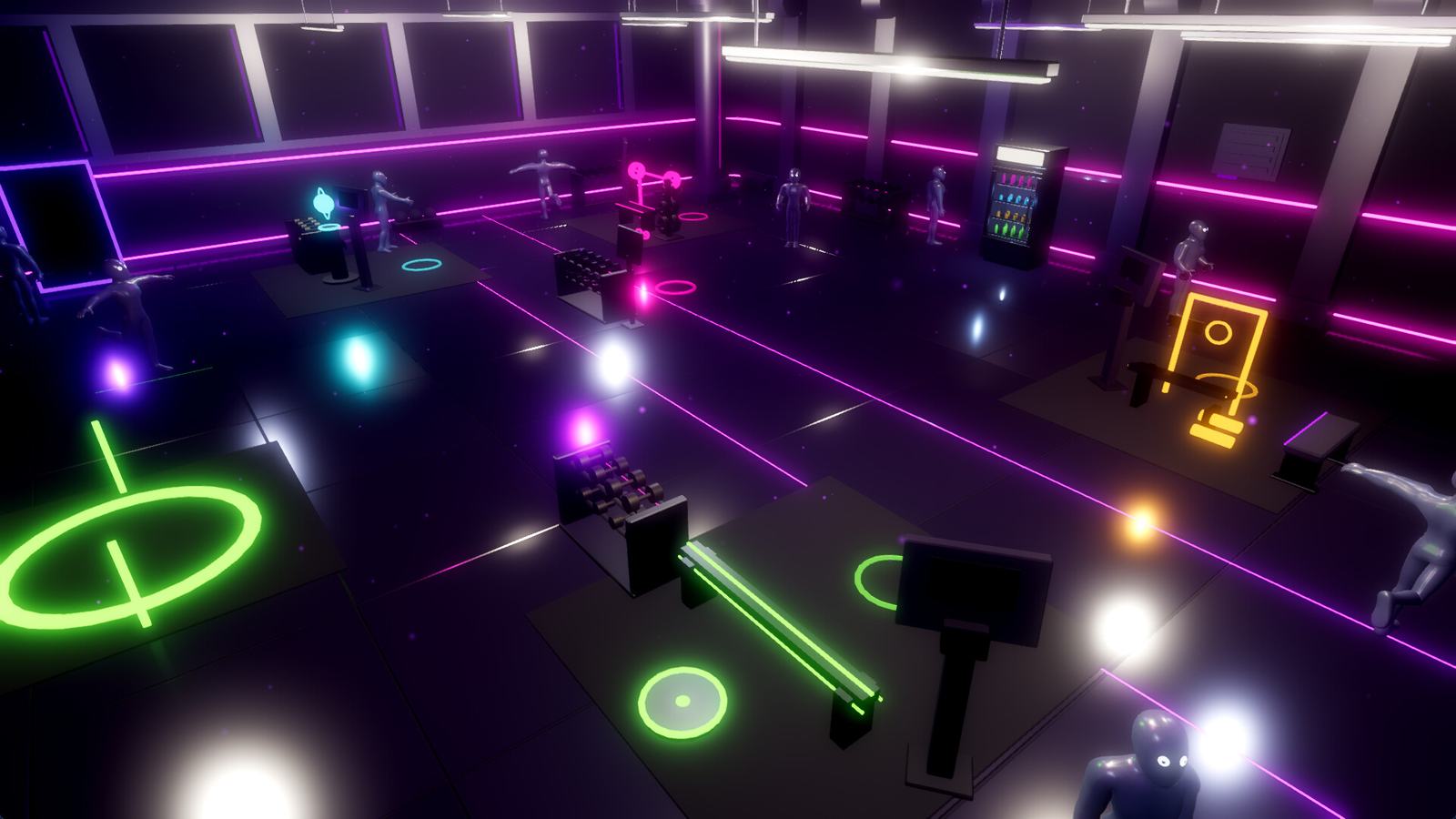
The released games ship demos too
The habit is not only for unreleased games. Tidewrack, out since 31 August 2026, still offers a free demo that opens exactly as the game does — a few logs, one harpoon, no land in sight — so you can test the driftwood-to-floating-town loop before spending anything. By My Side, the studio's first release from July 2026, demos its whole pitch: you wash up with nothing but your hands, chop wood, build a home through harsh seasons and wolf packs, and find out whether a stray dog joins you. That is a purchase decision made with evidence.
Demos before release, not after
The strongest pattern in current indie publishing is the pre-release demo. Both coming-soon games in our library — INKBORN and PARRYGON — already have free playable demos, so a stranger today becomes a wishlister months before launch, and launch day then begins with an audience instead of silence. Steam's Next Fest, which runs several times a year, is built entirely on this idea: upcoming games competing on playable slices. You can try INKBORN's demo right now on its Steam page.
For players the resolution is simple: before wishlisting a coming-soon game, check its page for a demo, and play it if one exists. Your wishlist gets better curated, the studio's launch gets better attended, and nobody pays for marketing in between. Our games index records demo availability for every covered title — all five currently read the same — and new coverage lands on the news desk as it happens.
Demo questions, answered
Do all five covered games have free demos?
Yes. Tidewrack, SlapGains and By My Side — released July through August 2026 — and the coming-soon INKBORN and PARRYGON each have a free demo on their Steam pages.
Can I play INKBORN and PARRYGON before release?
Yes. Both are listed as coming soon on Steam, and both demos are already playable and free. Wishlisting either game signs you up for its launch news.
Which of the five are out now?
By My Side released on 17 July 2026, SlapGains on 25 August 2026, and Tidewrack on 31 August 2026. INKBORN and PARRYGON are coming soon.